

💡 Disclaimer: This post is for educational purposes only. Trading and investing involve risk. Please do your own research before making decisions.
🔍 Introduction
One of the most common questions new traders ask is:
“If indicators are so powerful, why do I still miss the big moves?”
The simple truth: all indicators are lagging. They don’t predict the future — they process past market data to give signals. Understanding this limitation is the first step to using them effectively.
📉 Why Indicators Lag
Indicators like Moving Averages, RSI, MACD, and Bollinger Bands are built on historical price and volume data.
- A 20-day moving average, for example, only reflects the average of the last 20 days.
- By the time it signals a trend, the price has already moved.
- The longer the period (e.g., 50-day MA), the slower the reaction.
This delay creates a lag — you always see the signal after the event has already started.
📊 Visual Example
Below chart shows why indicators lag:
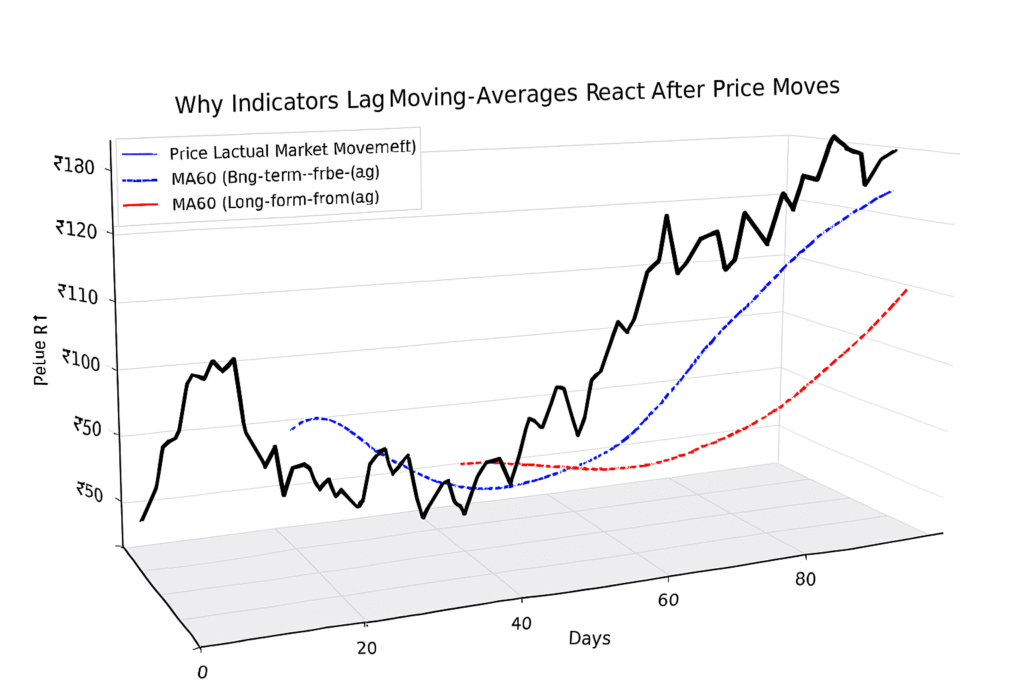
- Black line = Real-time price
- Blue dashed line = 20-day moving average (faster, less lag but more noise)
- Red dashed line = 50-day moving average (slower, smoother, but higher lag)
The moving averages always follow the price, never lead it.
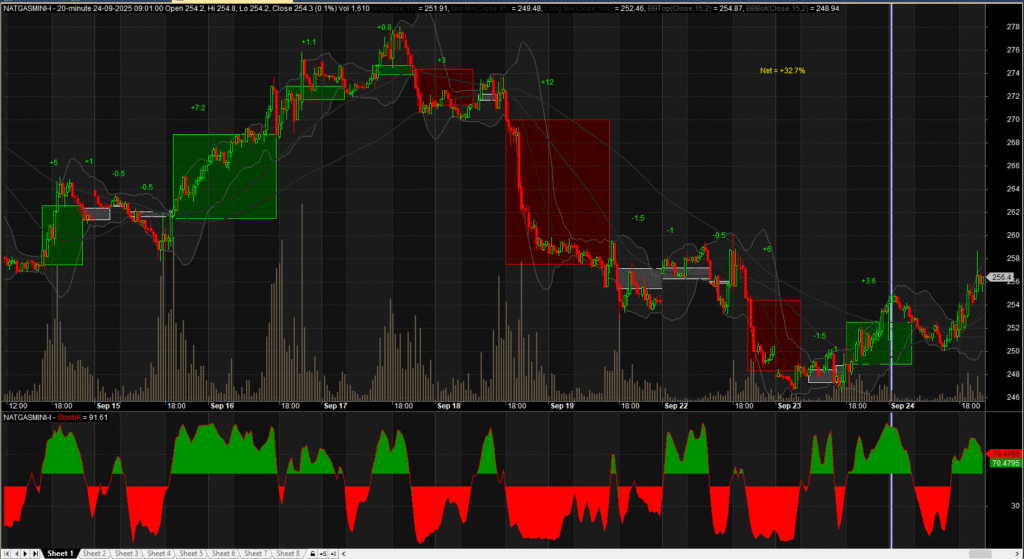

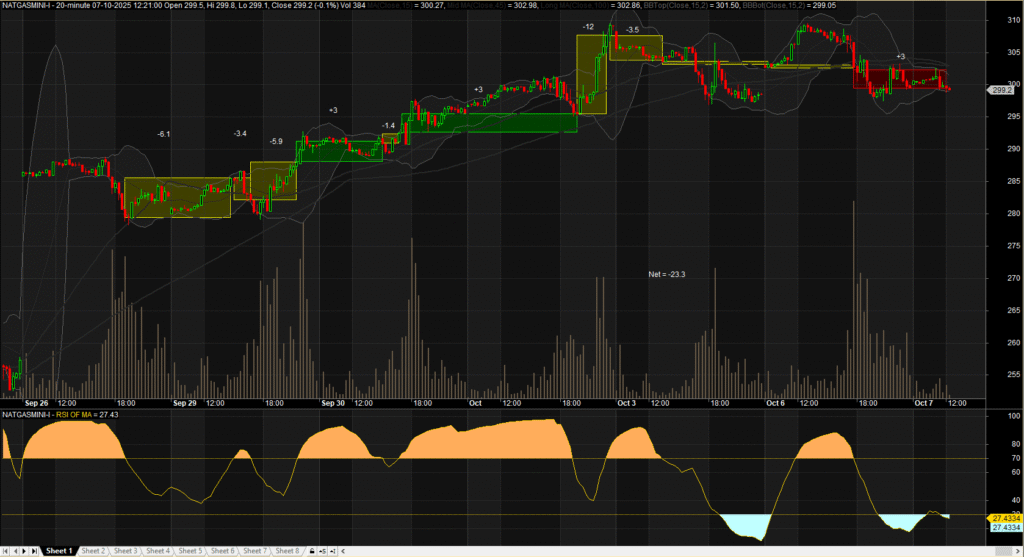
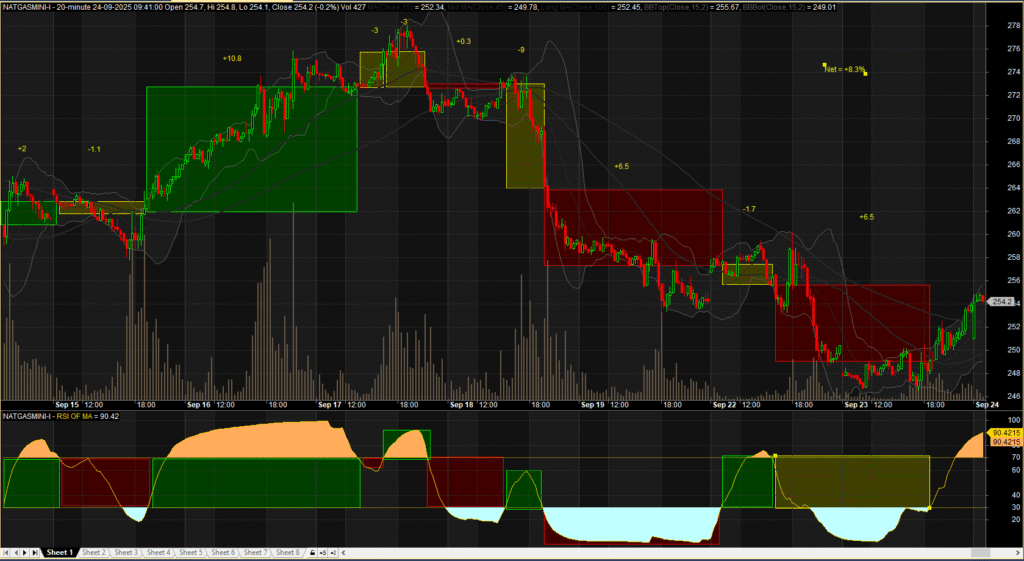
✅ Advantages of Lagging Indicators
- Smooth out noise and false moves
- Provide trend confirmation (helpful for disciplined trading)
- Work well for swing and position trading
- Easy to combine with backtesting and analysis
⚠️ Limitations
- Always late (enter after the move starts, exit after it ends)
- May give false signals in sideways/choppy markets
- Cannot predict sudden events (news, earnings, macro shocks)
🎯 How to Use Lagging Indicators Smartly
- Combine with leading tools like volume, price action, or support/resistance.
- Backtest your strategy to understand how much lag is acceptable.
- Use Analysis to adapt parameters to changing market conditions.
- Focus on risk management — indicators don’t remove risk, they just guide discipline.
🧠 Final Thoughts
All indicators lag — but that doesn’t make them useless.
Think of them like the rear-view mirror in a car: you can’t drive looking only at it, but it gives context and safety.
Successful traders don’t chase the “perfect indicator.” Instead, they combine tools, manage risk, and stay consistent.